Last updated: October 20, 2026 · By Brandon Lehman, Managing Partner, West Hive Capital
Neighborhood retail strip centers are outperforming most of commercial real estate in 2026, driven by service-based tenants that e-commerce cannot replace and a construction pipeline near multi-decade lows. National unanchored strip center vacancy sits at approximately 4.5 percent, according to Matthews Real Estate Investment Services (2025), while cap rates compressed roughly 15 basis points in Q1 2026, per Green Street’s Cap Rate Observer. The format that was dismissed as boring is now one of the more defensible positions in retail real estate.
The retail narrative has not changed in a decade: e-commerce is killing stores, malls are dying, brick-and-mortar is on borrowed time. It is a story that is easy to tell and mostly wrong, at least for the asset class we operate in.
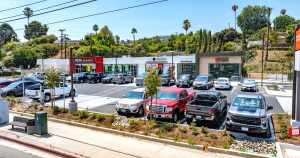
Neighborhood retail strip centers, the kind anchored by a nail salon, an urgent care clinic, a fast-casual restaurant and a dry cleaner, have been quietly filling up. Matthews Real Estate Investment Services reported that unanchored strip centers nationally were averaging a vacancy rate of roughly 4.5 percent, close in line with grocery-anchored centers and well below the broader multi-format retail average. Green Street’s Q1 2026 Cap Rate Observer found strip center values rising approximately 2 percent in the first quarter, while most other commercial real estate sectors held flat. In a market where commercial real estate has broadly struggled to hold value, that is a notable data point.
Why Are Service Tenants Filling Strip Centers?
Since 2020, a meaningful portion of the retail tenant base has shifted toward services and experiential uses, categories that require physical presence by definition. Physical therapy, med spa, urgent care, insurance, alterations, fast casual food: these are businesses that exist in a specific place for a specific neighborhood. Their customer base is not national. It is the 3-mile trade area around the center.
Where a soft goods retailer needed 3,000 square feet of storefront, a physical therapist or a quick service restaurant fills the same box and in most cases signs a longer lease. The format that was once considered boring, the small-bay neighborhood strip with a mix of everyday service tenants, has become one of the more defensible positions in retail real estate. For a deeper look at why the small-bay format specifically is drawing acquisition interest, see The Case for Small Bay Unanchored Strip Centers.
Why service retail does not care about Amazon
You cannot get a haircut delivered to your door. You cannot ship urgent care. You cannot download a Pilates class or a tax return. The tenants filling neighborhood strip centers are structurally immune to the displacement that hollowed out apparel and electronics. Their competition is other local operators, not a fulfillment center in Nevada.
What Does the Supply Picture Tell Strip Center Buyers?
Demand from service tenants would not matter as much if new supply were keeping pace. It is not. New retail construction is near multi-decade lows. In Southern California alone, NAI Capital reported that completed retail construction fell 45 percent year over year to roughly 473,000 square feet in the first half of 2026. The development pipeline in the same region declined 10 percent. Rising construction costs and entitlement timelines have made ground-up neighborhood retail economically marginal in most California markets, and the picture is similar across the Sunbelt.
The result is what any supply-demand imbalance produces: pricing power for landlords who own well-located, well-maintained space. Tenants who want to be in a quality center in a dense suburban corridor are paying to be there. CBRE’s 2026 retail outlook grouped open-air neighborhood strips alongside grocery-anchored centers as the two formats best positioned to sustain occupancy and rent growth through the year.
The Federal Reserve’s rate environment matters here too. Strip center buyers who are tracking the October 28 FOMC meeting and its implications for financing costs have a narrow but real window. Rate-sensitive sellers are still willing to negotiate on price in a way that may close as debt becomes cheaper.
Where Is the Distress in Strip Centers Today?
Distressed strip centers still exist, but the distress is usually not about demand. It is about operator neglect: deferred maintenance that drove out quality tenants, poor lease structures that locked in below-market rents or a capital structure that could not survive the rate environment of 2022 to 2024. The real estate is fine. The management was not.
Inland Empire retail vacancy ran at approximately 7.1 percent entering Q3 2026, elevated by local historical standards. But that number is skewed by larger-format and secondary assets. The service-oriented small-bay strips in dense suburban corridors tell a different story. Understanding which assets are distressed by fundamentals versus which are distressed by capital structure or management is the difference between a deal worth doing and one worth walking away from.
That distinction is where operators with ground-level market knowledge have an advantage over buyers relying solely on market-level data. National vacancy numbers are averages. The asset you are underwriting is not average.
Why Is Investor Attention Shifting Back to Neighborhood Retail?
The clearest evidence of neighborhood retail’s quiet outperformance is in the investor attention the asset class is drawing. Southern California retail investment sales reached approximately $3.52 billion in the first half of 2026, a 61.8 percent jump from the same period a year earlier, according to NAI Capital. The buyers driving that volume are not chasing trophy assets. They are buying the same kind of everyday needs, service-oriented centers that have been generating consistent occupancy through the volatility of the past four years.
The narrative has not caught up to the data. That gap is where we operate. Family offices and co-GP equity partners looking to access this asset class through an experienced operator can learn more about how we work with capital partners or reach out directly.
West Hive Capital focuses on neighborhood retail strip centers in Arizona and California. If you follow the asset class or want to track what we are seeing on the ground, connect with us about retail opportunities or learn about working with property owners.
Frequently Asked Questions
Why are neighborhood retail strip centers outperforming other retail types?
The main driver is tenant mix. Strip centers have shifted toward service-based businesses like physical therapy, urgent care, salons and fast-casual restaurants. These tenants require physical presence and are not threatened by e-commerce. Combined with very limited new construction, demand for well-located small-bay space has stayed strong while the broader retail narrative has remained negative, creating a gap between perception and performance.
What is the current vacancy rate for neighborhood retail strip centers?
Matthews Real Estate Investment Services reported a national average vacancy of approximately 4.5 percent for unanchored strip centers in 2025, roughly in line with grocery-anchored centers. In specific Sunbelt markets and along high-density suburban corridors, availability is tighter still. New construction supply is near multi-decade lows, which keeps downward pressure on vacancy.
How is neighborhood retail performing in 2026?
Performance varies significantly by asset and operator quality. Well-located centers with service-oriented tenant mixes and adequate parking have held occupancy and grown rents through the current rate cycle. Centers with deferred maintenance, below-market leases or poor parking ratios have not. The asset class has outperformed on the fundamentals side. Outcomes still depend heavily on execution.