Last updated: October 22, 2026 · By Brandon Lehman, Managing Partner, West Hive Capital
If you follow institutional retail investment, you know the dominant playbook: anchor to a grocery store, lock in a long term lease with a creditworthy tenant, collect a reliable coupon. It is a valid strategy. It is also fully priced. Grocery anchored centers in competitive markets routinely trade below 6 percent cap rates. CBRE’s Q1 2026 data showed the stabilized grocery anchored segment averaging around 5.44 percent. There is limited room for error at that entry point.
Key Takeaways
- Unanchored strip center vacancy: ~4.5% nationally — tightest conditions in 20+ years (Matthews 2025).
- Grocery-anchored cap rates in SoCal: sub-6%. Unanchored small bay offers higher yields with comparable occupancy.
- Service tenants — salons, physical therapy, urgent care — have structurally lower mobility than soft goods, driving higher renewal rates.
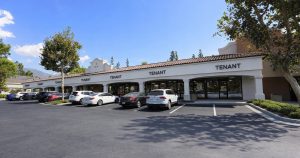
Our focus is the smaller, unanchored neighborhood strip center: the 15,000 to 100,000 square foot asset in a dense suburban corridor that a REIT would not bother underwriting and a large private equity firm cannot deploy enough capital into. That lack of institutional attention is not a warning sign. It is the opportunity.
Who fills small bay strip centers
In the centers we operate, the typical tenant mix breaks roughly as follows: 40 to 50 percent service businesses (salons, alterations, shipping, insurance), 20 to 30 percent food and beverage (fast casual, coffee, quick service), 15 to 20 percent health and wellness (physical therapy, med spa, urgent care). These tenants sign 3 to 5 year leases, have low buildout requirements and tend to renew. Their customers are the same neighborhood residents week after week.
What Does the Vacancy Data Show About Small Bay Strip Centers?
Matthews Real Estate Investment Services found in their 2025 analysis that unanchored strip centers nationally were averaging vacancy near 4.5 percent, roughly in line with the grocery anchored segment and well below the multi format retail average. CBRE’s 2026 retail outlook grouped open air neighborhood strips alongside grocery anchored centers as the two formats positioned to outperform on both occupancy and rent growth through the year. Southern California retail investment sales reached approximately $3.52 billion in the first half of 2026, a 61.8 percent jump from the same period a year earlier per NAI Capital via Commercial Observer, with demand concentrated in neighborhood and everyday needs centers.
The vacancy and investment volume data tell a consistent story: the asset class is undersupplied relative to demand. The reason the sector’s reputation has not caught up to the fundamentals is that most of the attention in retail real estate reporting focuses on the institutional end of the market, where the grocery anchor and the REIT define the frame of reference. Unanchored strips are a different business with a different buyer pool.
Why Is Parking the Key Filter for Small Bay Strip Center Deals?
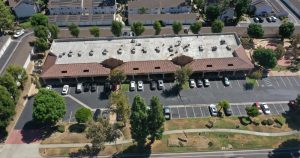
Our buy box is deliberate. Minimum 4:1 parking is a hard rule. Parking drives foot traffic, foot traffic drives sales, sales drive rent payment and renewals. Assets that look cheap because their parking has been compromised by pad sales, outparcel development or poor lot configuration stay cheap for a reason. We walk away.
This is not an arbitrary rule. The service tenants that fill small bay strips need customers who can park and return quickly. A hair salon’s repeat customer base requires convenient parking within sight of the entrance. A physical therapy clinic has patients coming three times a week for eight weeks. A quick service restaurant does most of its volume at lunch and dinner, when parking pressure peaks. A center that cannot handle that traffic volume cannot support the tenants. Tenants who struggle leave. Bad parking is how a good trade area produces bad occupancy numbers.
We have walked away from assets in strong corridors because the parking was compromised. The building and the location were fine. The center configuration made the economics of the service tenant mix unworkable. Getting that call right early is part of what determines outcomes at exit.
What Is the Management Complexity Premium in Small Bay Centers?
The operational complexity of a multi tenant strip center is real. Managing twelve to twenty tenants requires more leasing activity, more management attention and more vigilance about co-tenancy and parking than a single creditworthy anchor on a net lease. Most passive owners are not set up to handle it. Many local operators run these assets below their potential because they lack the systems, the leasing relationships or the capital to make targeted improvements.
That complexity is precisely why the pricing gap exists. Institutional buyers price the friction into their underwriting and conclude the returns do not justify the operational overhead at their cost of capital. Individual buyers without operating infrastructure overpay for the simplicity of the grocery anchor and underpay for the management premium embedded in unanchored pricing. The result is a segment where disciplined operators with the infrastructure to run these assets well can extract performance that simpler deals at lower cap rates do not offer.
What Is the Lease Structure Advantage of Small Bay Strip Centers?
Shorter lease terms are commonly cited as a risk in unanchored retail. They are also a structural advantage in a market where rents have been rising. Service tenant leases typically run 3 to 5 years. In a market where asking rents have increased and vacancy has tightened, shorter terms mean more frequent opportunities to mark rents to market. Renewals happen at current rates. New leases happen at current rates. The income stream stays current in a way that a 15 or 20 year grocery anchor lease does not.
We are not contrarians for the sake of it. The reason we focus on this segment is straightforward: it is where we have operational expertise, it is where pricing still reflects the work required to run it and it is where demand from small business tenants is structural rather than cyclical. Neighborhood retail serves the people who live around it. That is not going away.
West Hive Capital operates neighborhood retail strip centers in Arizona and California. To follow our market commentary or connect with us about retail opportunities, visit westhivecapital.com.
Frequently asked questions
What is an unanchored strip center?
An unanchored strip center is a neighborhood retail property without a major anchor tenant such as a grocery store or large discount retailer. Typically ranging from 10,000 to 150,000 square feet, these centers are occupied by a mix of service businesses, food and beverage operators and health and wellness tenants. The absence of an anchor means a different tenant risk profile: service tenants are more resilient to e-commerce and tend to renew at higher rates than soft goods retailers, and shorter lease terms allow rents to reset to market more frequently.
Why do unanchored strip centers have higher cap rates than grocery anchored ones?
Several factors contribute. Institutional buyers largely pass on the format because deal sizes are too small to deploy capital efficiently. Multi tenant management requires more operational infrastructure than a triple net anchor lease. And the absence of a creditworthy anchor is perceived as a risk factor by some lenders and buyers, even when vacancy data shows the format performs comparably. The combination of lower buyer competition and higher perceived complexity keeps pricing at a discount to the fundamentals, which is where the opportunity lives for operators with the right infrastructure.
What vacancy rates are unanchored strip centers running in 2026?
Matthews Real Estate Investment Services reported a national average vacancy of approximately 4.5 percent for unanchored strip centers in 2025, roughly in line with grocery anchored centers. In high demand Sunbelt submarkets with strong population density and limited new construction, vacancy can be tighter. NAI Capital reported Southern California retail vacancy across all formats at approximately 5.9 percent in H1 2026, with the gap between well located neighborhood centers and secondary assets continuing to widen.
| Format | Vacancy | SoCal Cap Rate | Anchor Dependency | Lease Length |
|---|---|---|---|---|
| Small Bay Unanchored Strip | ~4.5% | 6.0–6.8% | None | 3–5 years |
| Grocery-Anchored Center | ~4.2% | 5.0–5.8% | High | 10–20 years (anchor) |
| Shadow-Anchored Retail | ~5.0% | 5.8–6.5% | Moderate | Mixed |
Sources: Matthews 2025, CBRE 2026 Midyear Retail, Marcus & Millichap 2024 Strip Center Special Report.
Sources & Further Reading
- Matthews — No Anchor, No Problem: Unanchored Strip Center Report
- Marcus & Millichap — Unanchored Strip Centers Special Report
- CBRE — U.S. Real Estate Midyear 2026: Retail Outlook
- National Retail Federation — Annual Retail Industry Survey
- ICSC — U.S. Shopping Centers Economic Contribution Report
- JLL — U.S. Retail Outlook Research
About the Author

Managing Partner, West Hive Capital
Brandon brings 20+ years of experience in retail real estate development and operations. He previously led projects with SCG West and oversaw the acquisition, renovation, and exit of Western Plaza in Rancho Palos Verdes. He focuses West Hive Capital on neighborhood strip centers in Southern California and metro Phoenix.