Last updated: November 21, 2026 · By Brandon Lehman, Managing Partner, West Hive Capital
New retail is hard to build right now. The buyers who notice are turning to existing centers. Construction starts have fallen to levels not seen in years, while the cost of land, materials and debt keeps rising. This article explains why that gap makes established centers attractive. It also covers what an investor should weigh before relying on it. It is education only.
Key Takeaways
- CoStar reports that elevated land, construction and borrowing costs have pushed required rents well above prevailing market levels.
- Marcus & Millichap puts the construction pipeline at just 0.3 percent of existing inventory, mostly built to suit.
- An existing center is only a bargain if the price sits below true replacement cost and the location and building condition hold up.
Why is new retail construction so limited right now?
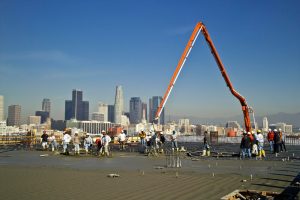
New retail construction is limited because the cost to build is high and the rents available to repay that cost are not. CoStar said that elevated land prices, construction costs and borrowing costs have pushed required rents well above prevailing market levels. It added that flat asking rents did little to close the gap. Its analyst Brandon Svec described a development environment that remains difficult to pencil in most markets.
The data shows the effect. CoStar reported about 58.3 million square feet of retail space under construction in Q3 2026, with new starts at their lowest quarterly total since at least 2016. Commercial Observer relayed CoStar data showing 64.2 million square feet under construction in Q1, below the 10 year average of 90 million.
What is driving construction and financing costs?
Materials, labor and debt are all moving the wrong way for developers. The Associated General Contractors of America, analyzing Bureau of Labor Statistics data, reported that input prices for new nonresidential construction rose 11.9 percent year over year through September 2026, the most in four years. It also cited tariffs of up to 50 percent that have pushed up metals prices.
Financing adds friction. TD Economics wrote in October that construction costs remain elevated while prevailing rents often fall short. It also said that elevated financing costs will remain a hurdle to the pace of retail development. CBRE made a similar point, noting that rising construction costs and a labor shortage have constrained new deliveries.
Is most new retail being built for a specific tenant?
Yes, most active construction is concentrated in built to suit projects rather than speculative multi tenant centers. Marcus & Millichap states that most active construction is in built to suit convenience stores and supermarkets. It also states that the pipeline equals just 0.3 percent of existing inventory as of mid 2026.
This matters for investors because a built to suit project starts with a committed user. We covered that model in our piece on why credit tenants make ground up neighborhood retail work. Ground up retail can still pencil when a creditworthy tenant carries the rent. Without that commitment, a developer has a hard time justifying a multi tenant center on speculation.
Why do buyers prefer existing retail centers to new construction?
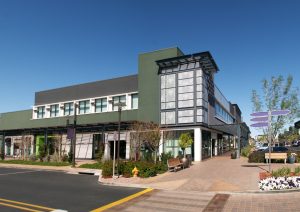
Buyers prefer existing centers because the space already exists and new competing space is scarce. CBRE reported that retail completions fell to 5.7 million square feet in Q2 2026, a record low for both the quarter and the rolling four quarter total in its data. It also reported an availability rate of 4.9 percent and average asking rent of $24.79 per square foot, up 2.4 percent year over year.
Capital is following that logic. Bisnow reported in September that Edens, a retail owner with 93 centers, had acquired a handful of properties so far this year, including a 263,000 square foot center in Carlsbad, California. The same article notes that Edens raised $850 million and did not specify how it would split the money between development and acquisitions, so Edens is not choosing one path exclusively.
CRE Daily framed the idea this way in April: landlords who already own well located retail may be in a stronger position than the headlines suggest. See also our investment thesis and our note on the narrowing acquisition window.
What does buying below replacement cost actually mean?
Buying below replacement cost means paying less per square foot than it would cost today to acquire land, build the same center and finance it. The idea is that an owner with a lower basis than a new competitor can charge competitive rents without a new project undercutting them. If new construction cannot pencil at current rents, as CoStar describes, a competing center is unlikely to appear nearby.
No public report we opened publishes a replacement cost figure for neighborhood strip centers, so every investor must build that estimate for the specific site. Use current local quotes for land and construction, then add the carrying cost of debt over the build period.
What should investors weigh before buying an existing center?
Investors should weigh replacement cost, location and deferred maintenance together, because a low price per square foot means little if one of the three fails. Consider each in turn:
- Replacement cost: compare the price with a current, site specific estimate to build, not a historical one.
- Location: trade area incomes, traffic counts, visibility and access determine whether rents can grow.
- Deferred maintenance: roofs, parking lots, storefronts and building systems can carry large capital needs that must be funded.
- Tenancy: lease expirations and rent levels shape the cash flow, so read the rent roll closely.
- Financing: borrowing costs affect every acquisition, as TD Economics noted.
Our acquisition playbook describes how we approach this diligence. Marcus & Millichap also notes that vacancy of 4.9 percent in June is projected to reach 5.0 percent by the end of 2026, so low supply does not remove the need to underwrite each center carefully. Nothing here predicts future performance.
FAQ: Why Are Buyers Choosing Existing Retail Centers Over New Construction?
Why is new retail construction so low?
Developers face elevated land prices, construction costs and borrowing costs that push required rents well above prevailing market levels, according to CoStar. That makes many projects hard to justify, so completions and starts have fallen to or near record lows.
Is buying an existing retail center cheaper than building one?
It can be, but only a property by property comparison shows it. An investor should compare the purchase price per square foot with a current estimate of land, construction and financing costs. It should also weigh location, condition and tenancy.
What should investors check before buying an existing center?
Investors should check the true cost to rebuild, the trade area and the physical condition of the roof, parking lot and systems. Investors should also review the lease expirations in the rent roll. A thorough inspection and a capital plan for deferred maintenance belong in every underwriting.
If you are a family office, co GP or accredited investor who wants to learn more about how West Hive Capital approaches neighborhood retail, connect with our team.
Sources & Further Reading
- CoStar: U.S. Retail Construction Activity Declined in Q3 2026
- Commercial Observer: U.S. Retail Construction Down Significantly in 2026
- TD Economics: U.S. Retail Commercial Real Estate
- Marcus & Millichap: 2026 U.S. Retail Real Estate Outlook
- CBRE: Q2 2026 U.S. Retail Market Figures
- AGC Data DIGEST, October 12 to 16, 2026
- Bisnow: Edens Raises $850M to Fund Retail Purchases, Developments
- CRE Daily: The Worst Time to Build Retail Is Becoming the Best Time to Own It
About the Author

Managing Partner, West Hive Capital
Brandon brings 20+ years of experience in retail real estate development and operations. He previously led projects with SCG West and oversaw the acquisition, renovation, and exit of Western Plaza in Rancho Palos Verdes. He focuses West Hive Capital on neighborhood strip centers in Southern California and metro Phoenix.
This article is for educational purposes only and is not an offer to sell or a solicitation of an offer to buy any security. Any offering is made only through confidential offering documents to qualified investors.